
Most Important Topics for Islamic Studies for CSS Exams 2027
The CSS examination stands as one of the most competitive civil service entry tests in Pakistan, with Islamic Studies playing a pivotal role in determining candidates’ overall scores. As you prepare for the CSS 2027 exam, understanding the Islamic Studies CSS topics becomes essential for strategic preparation. This comprehensive guide will walk you through the most significant areas of study, exam patterns, preparation strategies, and expert insights to help you excel in this crucial paper. Islamic Studies isn’t just another subject in the CSS examination; it’s a component that can significantly boost your cumulative score when approached with the right strategy and knowledge.
Table of Contents
- Understanding the CSS Islamic Studies Exam
- CSS Islamic Studies Syllabus Overview
- Most Important Topics in Islamic Studies for CSS
- Comparison of Preparation Resources
- Preparation Strategy for Islamic Studies CSS 2027
- Expert Tips for Scoring High
- Common Mistakes to Avoid
- Frequently Asked Questions
- CSS Islamic Studies Past Papers Analysis
- Conclusion
- Key Takeaways
Understanding the CSS Islamic Studies Exam
The CSS Islamic Studies exam is designed to assess candidates’ understanding of Islamic principles, history, and their application in contemporary contexts. This paper holds considerable weight in the overall CSS examination, making it a critical component of your preparation strategy.
Exam Pattern and Structure
The Islamic Studies paper in CSS examinations follows a structured format that tests both knowledge and analytical abilities. The examination typically consists of two main sections:
- Objective Section: This part contains multiple-choice questions designed to test factual knowledge of Islamic teachings, history, and practices.
- Subjective Section: This section comprises essay-type questions that require candidates to demonstrate deeper understanding, analytical thinking, and the ability to articulate complex concepts clearly.
The examination is conducted over a total duration of 100 minutes, with approximately 30 minutes allocated to the objective portion and 70 minutes for the subjective section. This time allocation reflects the importance placed on candidates’ ability to develop well-structured arguments and provide comprehensive answers to essay questions.
Marks Distribution and Time Allocation
Understanding the marks distribution is crucial for strategic preparation. The Islamic Studies paper carries a total of 100 marks, divided as follows:
- Objective Section: 20 marks
- Subjective Section: 80 marks
The subjective section typically includes:
- Two short questions (carrying 5-10 marks each)
- Two medium-length questions (carrying 10-15 marks each)
- Two long essay questions (carrying 15-20 marks each)
This distribution highlights the importance of mastering both factual knowledge and analytical skills. The significant weightage given to the subjective section (80%) indicates that examiners value candidates’ ability to articulate concepts, draw connections between different aspects of Islamic teachings, and apply knowledge to contemporary issues.
Weightage of Islamic Studies in Overall CSS Examination
Islamic Studies carries substantial importance in the overall CSS examination, contributing 200 marks out of the total 1,550 marks. This represents approximately 13% of the total marks, making it one of the higher-weighted compulsory subjects. When combined with the 100 marks from the Islamic Studies optional paper, Islamic-related subjects can contribute up to 300 marks to your total score.
“The CSS Islamic Studies paper is not merely a test of religious knowledge but an evaluation of how well candidates can apply Islamic principles to contemporary governance and societal challenges.” – Prof. Dr. Ahmed Hassan, CSS Examination Analyst
The strategic importance of this paper extends beyond its marks contribution. A strong performance in Islamic Studies can significantly boost your overall ranking, especially when combined with good scores in other compulsory subjects. Additionally, the knowledge gained through preparation for this paper often proves valuable in the interview stage, where candidates may be asked about their understanding of Islamic principles in governance and public administration.
CSS Islamic Studies Syllabus Overview
To excel in the CSS Islamic Studies examination, a thorough understanding of the complete syllabus is essential. The syllabus is designed to test candidates’ knowledge across various dimensions of Islamic teachings, history, and applications.
Complete Syllabus Breakdown
The CSS Islamic Studies syllabus is comprehensive, covering both theoretical and practical aspects of Islam. It can be broadly categorized into the following areas:
- Quranic Studies
- Quranic themes and concepts
- Major Surahs and their significance
- Quranic injunctions related to social, economic, and political systems
- Quranic hermeneutics and interpretation methods
- Sunnah and Hadith
- Authenticity and classification of Hadith
- Major books of Hadith
- Hadith literature related to governance and social issues
- Sunnah as a source of legislation
- Islamic Jurisprudence (Fiqh)
- Sources of Islamic law
- Major schools of thought
- Islamic law in contemporary contexts
- Jurisprudential methodology
- Islamic History
- Life of the Prophet Muhammad (PBUH)
- Rightly Guided Caliphate
- Islamic civilization and contributions
- Modern Islamic movements
- Islamic Beliefs and Practices
- Six articles of faith
- Five pillars of Islam
- Islamic ethics and morality
- Worship practices and their significance
- Islam in Contemporary Context
- Islam and governance
- Islam and human rights
- Islam and economic systems
- Islam and interfaith relations
Recent Updates in Syllabus for 2027
The CSS syllabus undergoes periodic revisions to ensure its relevance to contemporary challenges. For the 2027 examination, the following updates have been incorporated:
- Enhanced Focus on Contemporary Issues: The syllabus now places greater emphasis on how Islamic principles can be applied to modern governance challenges, including climate change, digital ethics, and global pandemics.
- Integration of Gender Perspectives: Updated sections now include more nuanced discussions on Islamic perspectives on gender equality, women’s rights, and family structures in contemporary contexts.
- Focus on Islamic Economics: The economic aspects of Islam have been expanded to include modern applications of Islamic finance, microfinance, and sustainable economic development models.
- Interfaith Dialogue: New components have been added to address Islam’s engagement with other faith traditions in pluralistic societies, reflecting the globalized context in which future civil servants will operate.
These updates indicate a shift toward a more dynamic and application-oriented approach to Islamic Studies, requiring candidates to demonstrate not just knowledge but also the ability to apply Islamic principles to contemporary scenarios.
Areas of Focus According to CSS Guidelines
According to the CSS examination guidelines, the following areas have been identified as key focus areas for the 2027 examination:
- Islamic Governance: Emphasis on how Islamic principles can inform modern governance structures, administrative ethics, and public policy.
- Social Justice in Islam: Focus on Islamic teachings regarding social equity, poverty alleviation, and community welfare.
- Environmental Ethics: Integration of Islamic perspectives on environmental stewardship and sustainable development.
- Technology and Ethics: Examination of how Islamic principles can guide technological development and digital governance.
These focus areas suggest that the CSS examination is moving toward a more practical, application-oriented approach to Islamic Studies, requiring candidates to demonstrate both theoretical knowledge and practical application skills.

Collaborative learning of Islamic political systems and governance structures
Most Important Topics in Islamic Studies for CSS
Based on past examinations and expert analysis, certain topics consistently appear in the CSS Islamic Studies paper and carry significant weightage. Mastering these high-priority topics can substantially improve your performance in the examination.
Comprehensive Coverage of High-Priority Topics
Quranic Studies
- Tawhid (Oneness of God): This fundamental concept appears in nearly every examination, either directly or indirectly. Candidates should understand its theological implications and how it relates to Islamic monotheism.
- Prophethood: Focus on the concept of prophethood in Islam, its significance, and how Muhammad (PBUH) is considered the Seal of Prophets.
- Revelation and Quran: Study the process of revelation, compilation of the Quran, and its preservation. The concept of “wahy” (revelation) and its various forms is particularly important.
- Quranic Social Order: Examine how the Quran addresses social issues, including family structure, economic justice, and governance.
Sunnah and Hadith
- Authenticity of Hadith: Understand the methodology used by scholars to authenticate Hadith, including the science of “jarh wa ta’dil” (criticism and praise).
- Classification of Hadith: Familiarize yourself with the various categories of Hadith (sahih, hasan, da’if) and their significance in Islamic jurisprudence.
- Hadith Literature: Study the major collections of Hadith, particularly Sahih al-Bukhari and Sahih Muslim, and their significance in Islamic scholarship.
- Sunnah as Legislation: Analyze how Sunnah functions as a source of legislation alongside the Quran, with emphasis on its binding nature for Muslims.
Islamic Jurisprudence
- Sources of Islamic Law: Master the four primary sources: Quran, Sunnah, Ijma (consensus), and Qiyas (analogical reasoning). Understand their hierarchy and interrelationship.
- Usul al-Fiqh: Study the principles of Islamic jurisprudence, including methodologies for deriving legal rulings from primary sources.
- Major Schools of Thought: Understand the historical development and key differences between the four Sunni schools (Hanafi, Maliki, Shafi’i, Hanbali) and the Jafari school.
- Ijtihad and Taqlid: Examine the concepts of independent reasoning (ijtihad) and emulation (taqlid), and their relevance in contemporary contexts.
Islamic History
- Life of the Prophet (PBUH): Detailed knowledge of the Prophet’s life, particularly the major events in Mecca and Medina, is essential.
- Rightly Guided Caliphate: Study the administration, achievements, and challenges faced during the reign of the Four Rightly Guided Caliphs.
- Islamic Civilization: Focus on the contributions of Islamic civilization to various fields, including science, philosophy, medicine, and governance.
- Modern Islamic Movements: Analyze major Islamic reform movements and their impact on contemporary Muslim societies.
Islam in Contemporary Context
- Islam and Governance: Examine Islamic principles of governance, including consultation (shura), justice (‘adl), and public welfare (maslaha).
- Islamic Economics: Study the principles of Islamic economics, including prohibition of interest (riba), zakat, and Islamic financial systems.
- Islam and Human Rights: Analyze how Islamic principles align with or diverge from modern human rights frameworks.
- Interfaith Relations: Examine Islamic teachings on relations with people of other faiths, emphasizing concepts of coexistence and mutual respect.
Topic-wise Weightage Analysis
Based on past examination papers, the approximate weightage of different topics is as follows:
| Topic Area | Approximate Weightage |
|---|---|
| Quranic Studies | 25% |
| Sunnah and Hadith | 20% |
| Islamic Jurisprudence | 20% |
| Islamic History | 15% |
| Islamic Beliefs and Practices | 10% |
| Islam in Contemporary Context | 10% |
This distribution indicates that while all areas are important, Quranic Studies, Sunnah and Hadith, and Islamic Jurisprudence collectively account for 65% of the examination content. Candidates should prioritize these areas while ensuring adequate coverage of other topics.
Past Trends and Recurring Themes
Analysis of past CSS Islamic Studies papers reveals several recurring themes and trends:
- Application of Principles: Questions increasingly focus on how Islamic principles can be applied to contemporary issues rather than mere theoretical knowledge.
- Comparative Analysis: Many questions require candidates to compare Islamic perspectives with other systems or viewpoints, testing critical thinking skills.
- Historical Context: Questions often place Islamic concepts in their historical context, requiring candidates to understand the circumstances that shaped Islamic teachings.
- Contemporary Relevance: There is a clear trend toward examining how Islamic teachings address modern challenges, including governance, human rights, and social justice.
- Interdisciplinary Approach: Questions increasingly require knowledge from multiple areas of Islamic Studies, such as combining Quranic teachings with historical examples or jurisprudential principles.
These trends suggest that the CSS examination is moving toward a more integrated and application-oriented approach, requiring candidates to demonstrate comprehensive understanding rather than isolated knowledge of specific topics.
Comparison of Preparation Resources
Selecting the right preparation resources is crucial for effective CSS Islamic Studies preparation. This section compares various resources to help you make informed choices.
Analysis of Recommended Books for Islamic Studies CSS
Traditional Textbooks
- “Islamic Studies” by Hafiz Karim Dad Chughtai: A comprehensive textbook covering all major areas of Islamic Studies. It provides detailed explanations of concepts and includes practice questions.
- “An Introduction to Islam” by Muhammad Hamidullah: An authoritative text focusing on the historical development of Islam and its core principles.
- “Studies in Hadith Methodology and Literature” by Muhammad Mustafa Azmi: Essential for mastering Hadith studies, including classification and authentication methodologies.
- “Usul al-Fiqh” by Dr. Hashim Kamali: A detailed examination of Islamic jurisprudential principles and methodologies.
Specialized Books for CSS
- “CSS Islamic Studies” by Dogar Brothers: Specifically designed for CSS aspirants, this book provides topic-wise coverage of the syllabus with past paper analysis.
- “Islamic Studies for CSS” by Jahangir Publishers: Includes comprehensive coverage of the syllabus with a focus on CSS examination requirements.
- “Islamiat Solved Papers” by various publishers: Collections of solved past papers that help understand examination patterns and question types.
Online Resources vs Traditional Study Materials
| Feature | Traditional Study Materials | Online Resources |
|---|---|---|
| Accessibility | Physical books require storage and transport; limited portability | Digital resources accessible anywhere with internet; highly portable |
| Cost | Generally higher initial cost but reusable | Often free or low-cost; some premium resources require subscription |
| Updates | Static content; requires new editions for updates | Dynamic content; frequently updated with latest information |
| Multimedia | Limited to text and images | Rich multimedia content including videos, interactive quizzes, and forums |
| Expert Guidance | Fixed content; limited interaction with experts | Direct access to experts through forums, webinars, and online courses |
| Self-paced Learning | Learner sets own pace but lacks structure | Structured learning paths with deadlines but flexible scheduling |
| Peer Interaction | Limited to study groups or classes | Global community of learners and experts |
Cost-effective Preparation Strategies
Preparing for CSS Islamic Studies doesn’t require a massive budget. Here are cost-effective strategies:
- Library Utilization: Make full use of public and university libraries that offer free access to essential books and resources.
- Online Open Courses: Platforms like Coursera, edX, and Khan Academy offer free courses on Islamic studies that can supplement your preparation.
- Study Groups: Form or join study groups to share resources and knowledge, reducing individual costs while enhancing understanding.
- Digital Resources: Utilize free digital resources including e-books, online forums, and academic journals available through public domain or institutional access.
- Past Papers: Collect past papers from online forums, library archives, or fellow candidates. Analyzing these is crucial for understanding examination patterns.
- Mobile Applications: Use educational apps that offer Islamic studies content, many of which are free or low-cost.
- YouTube Channels: Subscribe to educational channels that provide lectures and explanations of Islamic concepts relevant to CSS.
While traditional textbooks provide structured content, online resources offer flexibility and updated information. A balanced approach that combines both traditional and digital resources typically yields the best results for CSS Islamic Studies preparation.
Preparation Strategy for Islamic Studies CSS 2027
A well-structured preparation strategy is essential for mastering the Islamic Studies component of the CSS examination. This section provides a step-by-step guide to help you prepare effectively.
Step-by-step Preparation Guide
Phase 1: Foundation Building (Months 1-3)
- Syllabus Analysis: Thoroughly review the complete CSS Islamic Studies syllabus and create a topic-wise checklist.
- Resource Collection: Gather all necessary books, online resources, and past papers. Organize them by topic for easy reference.
- Basic Understanding: Read through all topics to develop a basic understanding of concepts without memorization. Focus on understanding rather than rote learning.
- Topic Categorization: Group topics into strengths and weaknesses. Identify areas that require more attention.
Phase 2: In-depth Study (Months 4-6)
- Focused Learning: Study each topic in depth, focusing on high-priority areas first. Allocate more time to topics with higher weightage.
- Note-taking: Create concise notes for each topic, highlighting key points, concepts, and examples. Use mind maps for visual organization.
- Conceptual Understanding: Move beyond rote learning to develop conceptual understanding. Ask “why” and “how” questions about each concept.
- Connective Learning: Identify connections between different topics. For example, how Quranic concepts relate to jurisprudential principles.
Phase 3: Practice and Refinement (Months 7-9)
- Past Paper Analysis: Solve past papers under timed conditions to understand examination patterns and question types.
- Self-assessment: Evaluate your performance and identify areas needing improvement. Focus on weak areas during revision.
- Answer Writing Practice: Practice writing structured answers for different question types, focusing on clarity, coherence, and completeness.
- Feedback and Improvement: Seek feedback from teachers or peers on your answers and incorporate suggestions for improvement.
Phase 4: Revision and Consolidation (Months 10-12)
- Comprehensive Revision: Review all topics, focusing on high-priority areas and your identified weaknesses.
- Memory Techniques: Use mnemonics, flashcards, and other memory aids to retain key information and concepts.
- Mock Tests: Take full-length mock tests under examination conditions to build stamina and time management skills.
- Final Polish: Refine your exam strategy, including time allocation for different question types and approaches to different sections.
Time Management Techniques
Effective time management is crucial for CSS Islamic Studies preparation:
- Daily Schedule: Create a daily study schedule with specific time blocks for different topics. Be realistic about what you can accomplish.
- Pomodoro Technique: Study in focused 25-minute intervals with short breaks to maintain concentration and prevent burnout.
- Weekly Planning: At the beginning of each week, plan your study objectives and allocate time accordingly.
- Monthly Review: At the end of each month, review your progress and adjust your plan for the following month.
- Examination Simulation: Practice answering questions under timed conditions to build
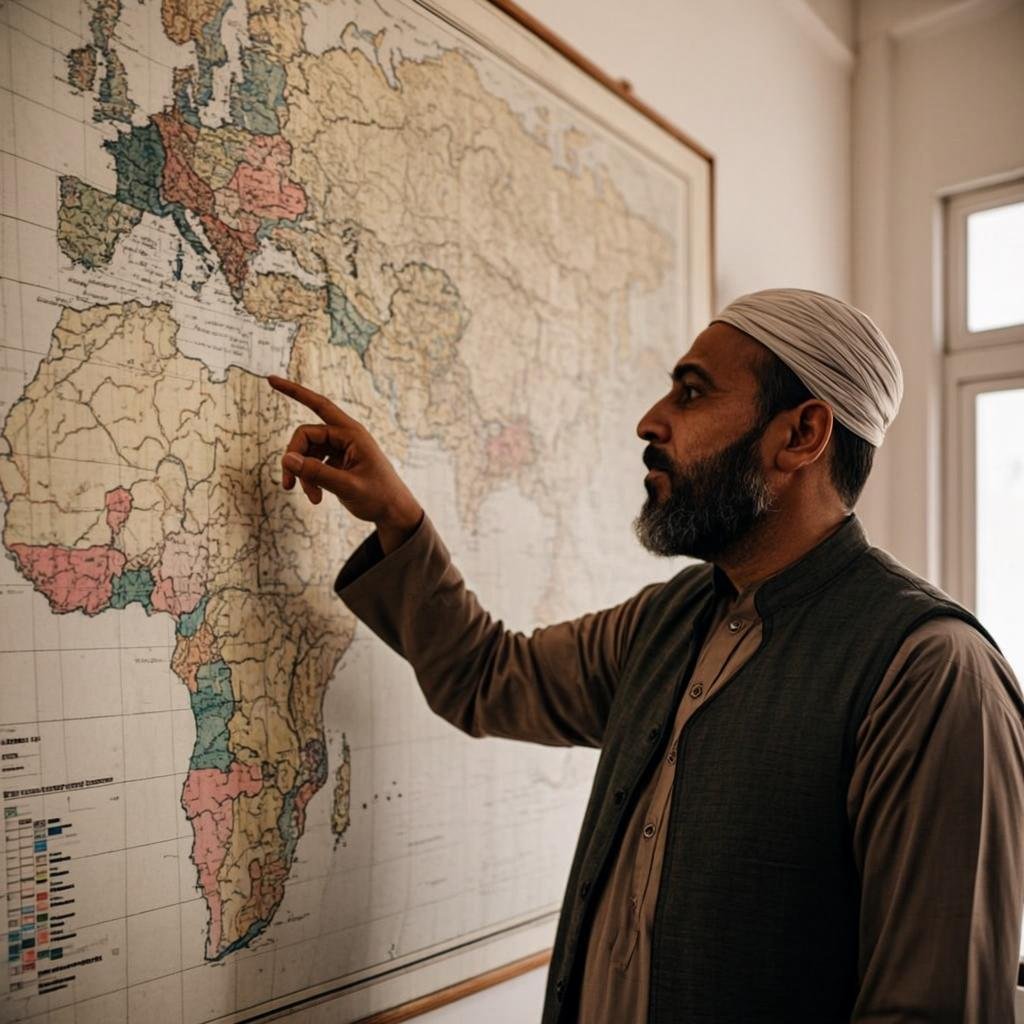
The geographical and historical context of Islamic civilization’s development


