
What To Do When CSS Exam are failed: CSS vs PMS Exam Comparison
The CSS exam represents one of the most prestigious competitive examinations in Pakistan, opening doors to elite civil service positions. However, failure in this exam is not the end of your journey but a pivotal moment for strategic reassessment. When facing disappointment after CSS exam results, many aspirants find themselves at a crossroads: should they attempt CSS again or pivot to the Provincial Management Service (PMS) exam? This comprehensive CSS vs PMS comparison will help you understand both pathways, evaluate your options after CSS failure, and develop a strategic approach to achieve your civil service aspirations. Whether you’re considering a CSS reattempt or exploring the PMS alternative, this guide provides the insights needed to make an informed decision and chart your path forward in Pakistan’s competitive civil service landscape.
Table of Contents
- Understanding CSS Exam Failure
- Immediate Steps After CSS Exam Failure
- CSS vs PMS: Comprehensive Comparison
- CSS vs PMS Examination: Detailed Comparison Table
- Preparing for PMS After CSS Failure
- CSS Reattempt Strategy
- Common Mistakes in CSS and PMS Preparation
- Expert Tips for CSS and PMS Success
- Frequently Asked Questions
- Conclusion: Charting Your Path Forward
- Key Takeaways
Understanding CSS Exam Failure
Common Reasons for CSS Exam Failure
The CSS examination, renowned for its rigorous selection process, presents numerous challenges that even well-prepared candidates may struggle to overcome. According to the Federal Public Service Commission (FPSC) annual reports, the pass rate for CSS exams typically hovers around 12-15%, indicating the intense competition and difficulty level. Several factors contribute to this high failure rate, with inadequate syllabus coverage being a primary concern. Many aspirants attempt to cover the entire CSS syllabus superficially without developing depth in any particular subject area.
Poor time management during the examination itself represents another critical failure factor. The CSS exam spans multiple days with extensive writing requirements, and candidates often find themselves unable to complete all questions within the allocated time. Additionally, insufficient preparation for the viva voce (interview) component leads to many qualified candidates falling short at the final stage. The interview carries 200 marks out of 1200, yet many aspirants dedicate disproportionate attention to written preparation while neglecting this crucial evaluation component.
“The CSS exam is not merely a test of knowledge but a comprehensive assessment of analytical thinking, communication skills, and personality development. Candidates who fail often excel in one area while neglecting others.” – Dr. Ayesha Khan, CSS Coaching Director
Psychological Impact of Failure
Experiencing CSS exam failure can trigger significant psychological distress for dedicated aspirants who have invested years of preparation. The emotional toll often manifests as feelings of inadequacy, diminished self-confidence, and social comparison with successful peers. According to a 2023 study by the Pakistan Psychological Association, 68% of CSS aspirants report experiencing moderate to severe anxiety following unsuccessful attempts, with 23% displaying symptoms consistent with depression.
This psychological impact extends beyond the individual to affect family relationships and social standing. Many candidates face familial pressure and societal expectations that intensify feelings of failure. However, understanding that CSS rejection does not define your worth or capabilities is crucial. The journey to civil service requires resilience, and each unsuccessful attempt can provide valuable insights that contribute to eventual success if approached constructively.
Statistics on CSS Exam Success Rates
Examining historical data reveals the competitive nature of the CSS examination. Between 2015 and 2023, the average success rate across all provinces remained approximately 13.2%, with slight variations each year. Punjab consistently recorded the highest number of candidates both applying and qualifying, while Balochistan maintained the highest success rate relative to its applicant pool.
The distribution of successful candidates across subjects shows that those with backgrounds in Political Science, History, and English Literature tend to perform better, likely due to the examination’s emphasis on essay writing and current affairs. Conversely, candidates with technical backgrounds often struggle more with the compulsory subjects, particularly essay and précis writing. These statistics highlight the importance of aligning one’s preparation strategy with the examination’s specific requirements rather than relying solely on academic background.
Importance of Post-Failure Analysis
When faced with CSS exam failure, conducting a thorough and honest post-mortem analysis becomes essential rather than immediately planning another attempt. This evaluation should encompass multiple dimensions beyond just marks obtained. Begin by reviewing each subject’s performance to identify specific weaknesses—whether conceptual gaps, poor writing style, or inadequate time allocation during the examination.
Engaging with experienced mentors who have successfully navigated the CSS process can provide invaluable perspectives on areas needing improvement. Additionally, analyzing the answer scripts of successful candidates from your province or similar background can reveal effective approaches and presentation techniques that you might have overlooked. This analysis should not focus on what went wrong, but rather on actionable insights that can inform your next preparation strategy, whether for CSS or PMS.
Immediate Steps After CSS Exam Failure
Emotional Recovery and Mindset Reset
After receiving disappointing CSS exam results, the first step is allowing yourself adequate time to process the emotional response without judgment. Suppressing feelings of disappointment or frustration often leads to prolonged psychological distress. Set a specific timeframe—perhaps one to two weeks—to acknowledge these emotions before shifting focus to constructive planning. During this period, engage in activities that reinforce your sense of self-worth beyond examination outcomes, maintaining physical health through exercise and adequate sleep.
Following this emotional recovery period, begin reframing the failure not as a definitive endpoint but as a data point in your professional development journey. Many successful civil servants, including current federal secretaries, experienced multiple CSS attempts before eventual success. According to a 2022 survey of Pakistan’s civil service elites, 43% required at least two attempts to qualify, demonstrating that persistence often triumphs over initial setbacks.
Strategic Evaluation of Performance
Once you’ve emotionally recovered, conduct a detailed strategic evaluation of your performance. Begin by obtaining your detailed marks sheet, which provides subject-wise breakdowns rather than just the final result. This document reveals whether your weaknesses lie in specific subjects, question selection, or examination technique. Create a performance matrix highlighting subjects where you scored highest and lowest, identifying patterns that might indicate systemic issues in preparation.
Simultaneously, assess your preparation methodology against the CSS syllabus requirements. Were you attempting to cover too many subjects superficially? Did you allocate sufficient time to current affairs and essay practice? This evaluation should be brutally honest—acknowledging weaknesses without self-criticism. Consider forming a small study group with fellow unsuccessful candidates to compare experiences and insights, which might reveal common pitfalls you individually overlooked.
Consultation with Mentors and Successful Aspirants
Seeking guidance from those who have successfully navigated the CSS or PMS pathways provides invaluable perspective beyond self-analysis. Identify mentors who understand both examination systems and can offer personalized advice based on your specific performance profile. When approaching potential mentors, prepare specific questions rather than seeking general guidance—this demonstrates respect for their time and increases the likelihood of receiving targeted advice.
Additionally, connect with recently successful CSS candidates who can share their preparation strategies and mistakes they made during earlier attempts. Their firsthand experience with the examination’s evolving patterns and requirements offers practical insights that generic advice cannot provide. Consider reaching out through professional networks, CSS coaching centers, or alumni associations of educational institutions known for producing successful civil servants.
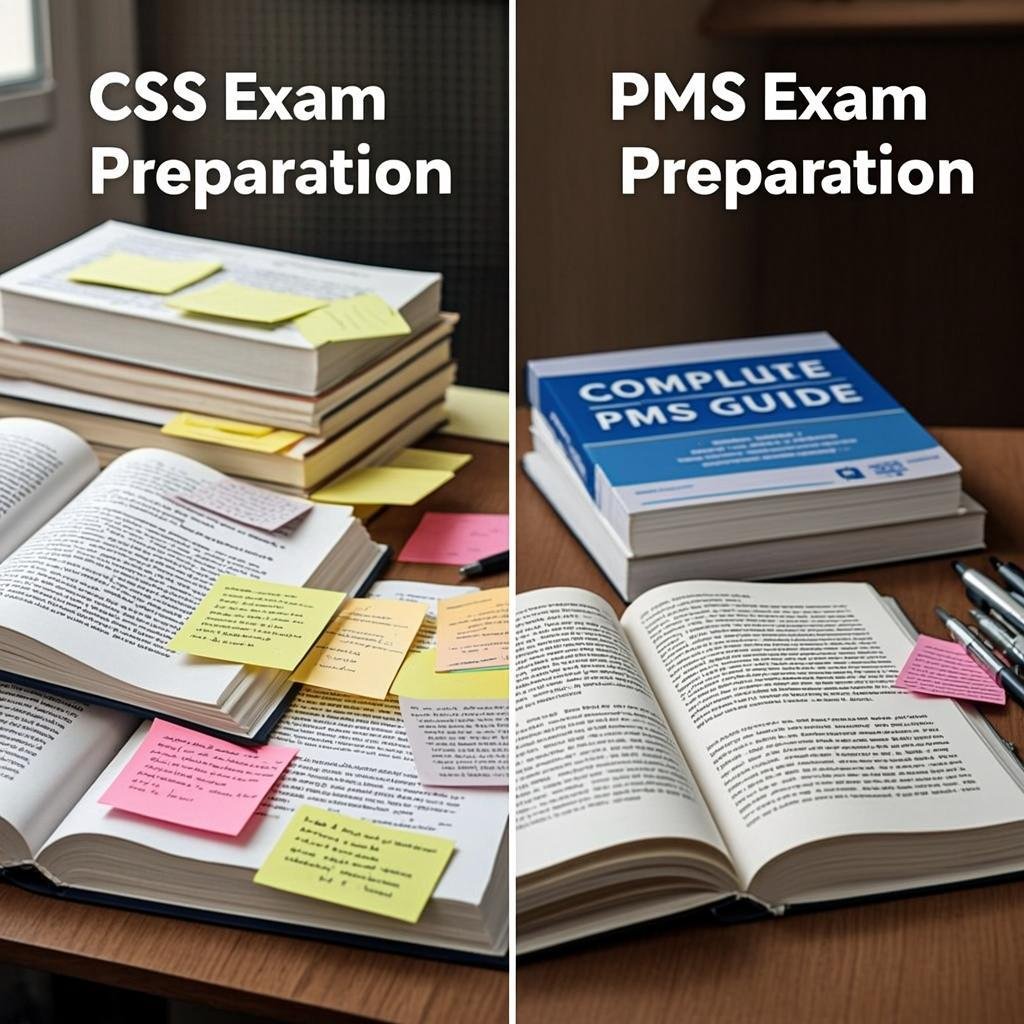
Understanding the differences between CSS and PMS exam structures
CSS vs PMS: Comprehensive Comparison
Administrative Structure and Career Progression
The CSS vs PMS comparison reveals fundamental differences in administrative structure and career progression that significantly impact an aspirant’s professional trajectory. The Central Superior Services (CSS) operates under the federal government, offering entry into 12 different occupational groups including Pakistan Administrative Service (PAS), Police Service of Pakistan (PSP), and Foreign Service of Pakistan (FSP). CSS officers typically begin at BPS-17 and can rise to BPS-22, with opportunities for federal secretarial positions and diplomatic postings.
In contrast, the Provincial Management Service (PMS) operates at the provincial level, with each province conducting its own examination and selection process. PMS officers generally start at BPS-17 within their respective provincial administrative services, with opportunities to progress to provincial secretarial positions. While CSS offers broader geographical mobility and exposure to federal policy-making, PMS provides deeper engagement with provincial governance issues and often allows for quicker promotion within the provincial hierarchy.
Examination Structure and Syllabus
The examination structures for CSS and PMS present distinct challenges requiring tailored preparation strategies. The CSS examination consists of 12 compulsory subjects including Essay, Current Affairs, Pakistan Affairs, Islamiat, and nine optional subjects from various disciplines. The compulsory portion carries 600 marks, while optional subjects contribute 600 marks, totaling 1200 marks. The CSS viva voce adds another 300 marks, making the final assessment out of 1500.
PMS examinations vary slightly by province but generally consist of 6-8 compulsory subjects carrying 600-700 marks, with 3-4 optional subjects contributing 300-400 marks. The PMS interview typically carries 100-200 marks. While the CSS syllabus tends to be more extensive and theoretically oriented, PMS examinations often emphasize practical knowledge of provincial issues and local governance contexts. This fundamental difference in examination structure significantly impacts preparation methodologies and time allocation strategies.
Geographic Mobility and Posting Preferences
One of the most significant distinctions in the CSS vs PMS comparison relates to geographic mobility and posting preferences. CSS officers enjoy nationwide mobility, with opportunities for postings across Pakistan and international diplomatic assignments. This mobility allows CSS officers to develop a comprehensive understanding of Pakistan’s diverse regional contexts and build national networks. However, it also requires frequent relocations, which can strain personal and family life.
PMS officers primarily serve within their respective provinces, developing deep expertise in local administrative contexts, cultures, and governance challenges. While inter-provincial postings are less common, they do occur, particularly for specialized roles. The geographic stability of PMS postings allows officers to build stronger community connections and develop nuanced understanding of provincial dynamics. For individuals with strong ties to their home province or preference for settled family life, PMS may offer more desirable posting patterns.
Salary and Benefits Comparison
The compensation packages for CSS and PMS officers differ in structure and scale, reflecting their respective administrative scopes. CSS officers generally receive higher starting salaries due to federal pay scales and additional allowances. A newly inducted CSS officer at BPS-17 typically earns between 80,000-100,000 PKR monthly, with substantial increases upon promotion to higher scales. Federal government housing, educational allowances for children, and comprehensive healthcare benefits further enhance the total compensation package.
PMS officers start at comparable basic salaries (BPS-17: 70,000-90,000 PKM monthly) but may have fewer additional allowances and benefits. However, provincial governments often provide housing and other facilities that improve the overall compensation. The salary progression for both paths follows similar incremental patterns, with CSS officers generally maintaining a slight advantage in total compensation due to federal pay scales and additional allowances.
Prestige and Career Opportunities
When evaluating the CSS vs PMS comparison, prestige and career opportunities represent significant considerations. CSS positions generally carry higher prestige due to their association with federal policy-making, diplomatic engagements, and national governance. CSS officers have greater opportunities to interact with federal ministers, secretaries, and international counterparts, potentially accelerating career advancement toward the highest echelons of civil service.
PMS officers, while enjoying high respect within their provinces, have more limited exposure to national policy-making processes. However, they often develop stronger expertise in provincial governance issues and may find opportunities in specialized provincial departments where their knowledge of local contexts provides significant advantages. The career trajectory for PMS officers can be more predictable within provincial administrative structures, while CSS offers broader but potentially more competitive advancement paths.
Work-Life Balance and Challenges
The work environments and challenges faced by CSS and PMS officers differ substantially, impacting quality of life and job satisfaction. CSS officers typically experience higher work demands due to involvement in national policy formulation, crisis management, and inter-provincial coordination. The expectation of constant availability and frequent transfers can lead to significant work-life balance challenges, particularly for officers with family responsibilities.
PMS officers generally experience more manageable workloads and greater stability in postings, allowing for better work-life balance. However, they face unique challenges related to provincial political dynamics and implementation of federal policies at the local level. The nature of work in PMS often involves more direct engagement with citizens and local governance issues, requiring strong problem-solving skills and adaptability to provincial political contexts.
CSS vs PMS Examination: Detailed Comparison Table
| Parameter | CSS Examination | PMS Examination |
|---|---|---|
| Conducting Authority | Federal Public Service Commission (FPSC) | Provincial Public Service Commissions |
| Total Marks | 1500 (1200 written + 300 viva voce) | 1000-1200 (700-800 written + 100-200 interview) |
| Compulsory Subjects | 12 subjects (600 marks) | 6-8 subjects (600-700 marks) |
| Optional Subjects | 9 subjects (600 marks) | 3-4 subjects (300-400 marks) |
| Age Limit | 21-30 years (with relaxations) | 21-28 years (varies by province) |
| Educational Requirement | Bachelor’s degree (14 years education) | Bachelor’s degree (14 years education) |
| Attempt Limit | No formal limit (practical 3-4 attempts) | Varies by province (typically 3 attempts) |
| Geographic Scope | Nationwide postings | Primarily provincial postings |
| Career Progression | BPS-17 to BPS-22 | BPS-17 to BPS-21 (varies by province) |
| Starting Salary | Higher due to federal allowances | Comparable but with fewer allowances |
| Prestige Factor | Higher national prestige | High provincial respect |
| Workload | Generally higher demands | More manageable workloads |
| Transfer Frequency | Frequent transfers across Pakistan | Less frequent, primarily within province |
Preparing for PMS After CSS Failure
Leveraging CSS Preparation Experience
Candidates transitioning from CSS to PMS preparation can significantly benefit from their previous experience, provided they strategically adapt their approach. The knowledge acquired while preparing for CSS—particularly in compulsory subjects like Current Affairs, Pakistan Affairs, and Essay writing—forms a strong foundation for PMS preparation. However, the emphasis must shift from federal to provincial contexts, requiring a reframing of existing knowledge to align with provincial governance structures, issues, and administrative practices.
Begin by creating a knowledge mapping exercise that identifies CSS-prepared topics relevant to PMS syllabus. For instance, your understanding of Pakistan’s constitutional framework can be specialized to focus on provincial constitutional provisions and autonomy. Similarly, current affairs knowledge should be filtered through provincial lenses, emphasizing regional political developments, economic policies affecting the province, and local governance challenges. This strategic knowledge repurposing accelerates PMS preparation while building on existing expertise.
Adapting Study Materials and Resources
The transition from CSS to PMS requires careful selection of study materials that address provincial-specific knowledge gaps. While many resources overlap between the two examinations, PMS demands deeper understanding of provincial administrative systems, local governance structures, and provincial-specific policies. Begin by gathering provincial-specific textbooks and publications that detail your province’s administrative history, development policies, and governance frameworks.
Additionally, focus on recent reports and policy documents from your provincial government, which provide insights into current priorities and approaches to governance. Local newspapers and regional news outlets offer valuable perspectives on provincial issues that may not receive coverage in national media. Consider connecting with current PMS officers who can recommend province-specific resources and share insights into examination patterns set by your provincial public service commission.
Provincial Current Affairs Focus
One of the most critical adjustments when shifting from CSS to PMS preparation is the refocusing of current affairs from national to provincial contexts. While national current affairs remain important, PMS examinations place greater emphasis on regional political developments, provincial economic policies, and local governance challenges. Develop a systematic approach to tracking provincial news, including legislative assemblies’ proceedings, provincial budget allocations, and development projects specific to your region.
Create separate current affairs notebooks for national and provincial information, with the provincial section receiving proportionally greater attention. Pay particular attention to your province’s relationship with the federal government, including issues of resource allocation, administrative autonomy, and implementation of federal policies at the provincial level. This nuanced understanding of provincial dynamics often differentiates successful PMS candidates from those who merely adapt CSS preparation approaches.
Networking with Provincial Aspirants and Officers
Building a network of fellow PMS aspirants and current provincial officers provides invaluable insights specific to your provincial examination system. Join provincial-level study groups or online forums dedicated to PMS preparation in your province. These communities share province-specific past papers, analysis of recent examination trends, and insights into the evaluation preferences of your provincial public service commission.
Additionally, seek opportunities to interact with current PMS officers through professional networks or alumni associations. Their firsthand experience with the provincial administrative system, examination preparation strategies, and career progression offers practical guidance that transcends generic advice. When engaging with these professionals, prepare specific questions about provincial administrative challenges, career satisfaction factors, and work-life balance realities to gain a comprehensive understanding of the PMS career path.
Provincial Administrative Structure Understanding
Developing a thorough understanding of your province’s administrative structure represents a critical component of PMS preparation that differs significantly from CSS focus. Research the organizational hierarchy of provincial departments, the roles and responsibilities of key positions, and the relationships between various administrative bodies. Pay particular attention to the division of responsibilities between federal and provincial governments as outlined in the constitutional framework, particularly the 18th Amendment’s devolution provisions.
Create visual diagrams or flowcharts depicting your province’s administrative structure, including line departments, autonomous bodies, and local government institutions. This visual representation aids in understanding administrative workflows and inter-departmental relationships. Additionally, study recent administrative reforms in your province, as these often become topics for essay questions and interview discussions, demonstrating your awareness of evolving governance practices.

Exploring alternative paths after CSS exam disappointment
CSS Reattempt Strategy
Identifying and Addressing Weaknesses
When planning a CSS reattempt, the first step involves a systematic identification of specific weaknesses that contributed to previous failure. Rather than a general “need for improvement,” pinpoint exact areas—whether particular subjects, question types, or examination techniques—that performed below expectations. Review your previous answer scripts (if available) or analyze past performance patterns to identify these precise gaps.
Create a subject-wise weakness matrix categorizing issues into knowledge gaps, writing deficiencies, time management problems, or question selection errors. For each identified weakness, develop specific remedial strategies. For instance, if Current Affairs performed poorly, implement a structured daily current affairs routine with note-taking and periodic revision. If essay writing lacks coherence, practice timed essay writing with regular feedback from experienced evaluators. This targeted approach ensures efficient use of preparation time and maximizes improvement potential.
Syllabus Optimization and Subject Selection
Optimizing your subject selection represents a critical strategic decision when planning a CSS reattempt. Many candidates make the mistake of maintaining the same subject combination that previously failed, without considering whether alternative choices might better align with their strengths and the examination’s requirements. Evaluate your performance in optional subjects from previous attempts, considering both scoring


