
CSS Exams 2027: How to Prepare for MPT and Written Tests Successfully
The CSS exam remains one of Pakistan’s most prestigious competitive examinations, opening doors to prestigious civil service positions. As you embark on your journey to conquer CSS 2027, understanding the multifaceted preparation strategy becomes paramount. This comprehensive guide provides CSS aspirants with strategic insights for successful preparation of the MPT and Written Tests in 2027, equipping you with the knowledge, resources, and methodologies needed to excel in this rigorous examination process.
Table of Contents
- Overview of CSS Exam Structure
- Understanding the MPT 2027 Pattern
- Written Exam Preparation Strategy
- Subject Selection Guidelines
- Recommended Resources and Books
- MCQ Enhancement Techniques
- Time Management for CSS Preparation
- Common Mistakes to Avoid
- Expert Tips from CSS Toppers
- CSS MPT Screening Test Dates 2027
- Eligibility Criteria and Application Process
- Interview Preparation Guidelines
- Frequently Asked Questions
- Conclusion and Call to Action
- Key Takeaways
Overview of CSS Exam Structure
Understanding the CSS examination hierarchy is crucial for any aspirant aiming to succeed in CSS 2027. The Central Superior Services (CSS) examination, conducted by the Federal Public Service Commission (FPSC), represents the gateway to Pakistan’s most coveted administrative positions. The examination process is meticulously designed to assess candidates across multiple dimensions, ensuring only the most capable individuals join the civil service.
The CSS examination hierarchy consists of three distinct yet interconnected stages: the MPT (Modified Proficiency Test), Written Examination, and Psychological Assessment. Each stage serves as a filter, progressively narrowing down the pool of candidates to identify those with the intellectual capacity, knowledge base, and psychological fitness required for leadership roles in the civil service. According to FPSC’s latest examination policy, approximately 12,000 candidates appear for the MPT annually, with only about 2,500 qualifying for the written examination, and ultimately just a few hundred securing positions in the final merit list.
Key Components of the CSS Examination
The MPT, introduced in recent years, represents the first hurdle in the CSS 2027 examination process. This computer-based test evaluates candidates’ proficiency in English language, general knowledge, and basic cognitive abilities. The MPT typically includes multiple-choice questions covering vocabulary, grammar, current affairs, Pakistan affairs, and basic mathematics. Importantly, the MPT serves as a screening mechanism, with candidates needing to achieve a minimum qualifying score to progress to the written examination stage.
The Written Examination forms the core assessment component of CSS 2027, comprising both compulsory and optional subjects. Candidates must appear in six compulsory subjects including Essay, Current Affairs, Pakistan Affairs, Islamic Studies, General Knowledge, and one of the three language papers (Urdu, English, or Arabic). Additionally, candidates select three optional subjects from a list of approximately thirty disciplines, allowing them to leverage their academic strengths and interests. The written examination spans over a period of three weeks, with each subject allocated a specific duration of three hours.
Weightage of Each Component
Understanding the weightage of each component is crucial for strategic preparation for CSS 2027. The final merit list is calculated based on a composite score derived from all examination stages. The MPT contributes 20% to the final score, the written examination accounts for 70%, and the psychological assessment and interview combined contribute the remaining 10%. This distribution highlights the importance of excelling in the written examination while ensuring adequate performance in the MPT and psychological assessment.
“Success in CSS is not about mastering one aspect but excelling across all examination components while maintaining psychological resilience throughout the demanding process.” – CSS 2024 Topper, Ahmed Hassan Khan
Recent Changes in CSS Examination Pattern
The CSS examination has evolved significantly over the years, with several important changes implemented for CSS 2027. The most notable modification is the enhanced focus on current affairs and contemporary issues, reflecting the dynamic nature of governance and administration in Pakistan. Additionally, the FPSC has revised the syllabus for compulsory subjects to emphasize critical thinking and analytical abilities rather than rote memorization.
The MPT pattern has also been refined to better assess candidates’ cognitive abilities and language proficiency. The 2027 iteration is expected to include more scenario-based questions that evaluate problem-solving skills in administrative contexts. Moreover, the psychological assessment component has been strengthened to include additional evaluation methods that assess candidates’ emotional intelligence and leadership potential—qualities deemed essential for modern civil servants.
Understanding the MPT 2027 Pattern
The Modified Proficiency Test (MPT) represents the first critical hurdle in your CSS 2027 journey. Understanding its pattern, structure, and evaluation criteria is essential for developing an effective preparation strategy. The MPT has been designed as a comprehensive assessment tool that evaluates candidates’ language proficiency, general knowledge, and cognitive abilities in a computer-based testing environment.
MPT Structure and Components
The CSS 2027 MPT will consist of multiple sections designed to assess different competencies. The test typically includes:
- English Language Section: Evaluates vocabulary, grammar, reading comprehension, and writing skills
- General Knowledge Section: Assesses knowledge of current affairs, world events, and basic sciences
- Pakistan Affairs Section: Focuses on Pakistan’s history, politics, and current developments
- Quantitative Ability Section: Tests basic mathematical skills and problem-solving abilities
- Analytical Reasoning Section: Evaluates logical thinking and pattern recognition
Each section contains approximately 20-25 questions, with the entire test designed to be completed within 100 minutes. The computer-based format requires candidates to adapt to the interface while maintaining speed and accuracy—a combination that can significantly impact performance.
MPT Evaluation Criteria
The MPT employs a sophisticated evaluation system that considers both accuracy and speed. According to FPSC’s latest guidelines for CSS 2027, the MPT will use a negative marking system where 0.25 marks will be deducted for each incorrect answer, while correct answers will earn one mark. This scoring mechanism necessitates a strategic approach to question selection during the examination.
The evaluation process also includes an adaptive element where the difficulty of certain questions may adjust based on a candidate’s performance. This adaptive testing approach allows the FPSC to more accurately assess a candidate’s true abilities across different skill domains. For CSS 2027 aspirants, understanding this adaptive nature is crucial for maintaining composure throughout the test, especially when encountering questions of varying difficulty levels.
Preparation Strategies for MPT 2027
Effective preparation for the CSS 2027 MPT requires a targeted approach that addresses each section’s unique requirements. Begin by familiarizing yourself with the computer-based testing interface through practice software provided by FPSC or third-party preparation platforms. This familiarity will reduce test-day anxiety and allow you to focus on the content rather than the delivery mechanism.
For the English language section, focus on building a strong vocabulary base through systematic learning of root words, prefixes, and suffixes. Reading quality publications daily will enhance both your comprehension and writing abilities. The general knowledge section requires staying updated with current affairs through reliable sources and developing a systematic approach to retaining information. For Pakistan affairs, create a comprehensive timeline of historical events and contemporary developments to establish context and connections.
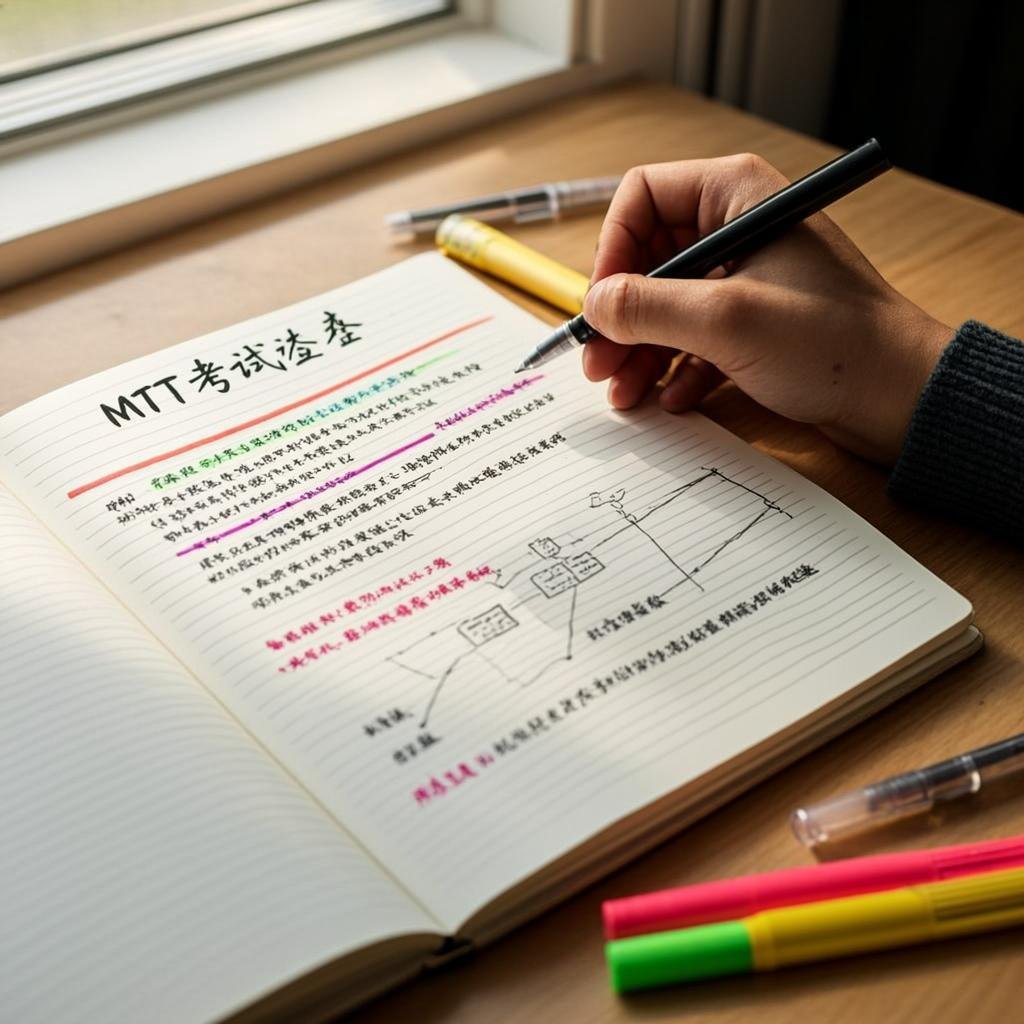
Organized note-taking helps in mastering MPT techniques
Written Exam Preparation Strategy
The written examination constitutes the most substantial component of CSS 2027, accounting for 70% of your final score. Developing a robust preparation strategy for this stage is therefore critical to your success. The written examination spans multiple weeks, requiring candidates to demonstrate knowledge across both compulsory and optional subjects while maintaining peak performance throughout.
Compulsory Subjects Preparation
The compulsory subjects form the foundation of your CSS 2027 preparation. Begin with Essay preparation, which requires developing a structured approach to essay writing. Focus on understanding different essay types—expository, argumentative, and descriptive—and practice writing essays on diverse topics within the time constraints of the examination. Create a repository of quotes, statistics, and examples that can be applied across various essay topics.
For Current Affairs, develop a systematic method for staying updated with both national and international developments. Create daily, weekly, and monthly summaries of important events, analyzing their implications rather than merely memorizing facts. Pakistan Affairs requires a deep understanding of the country’s history, political system, and constitutional framework. Develop analytical frameworks to evaluate historical events and their contemporary relevance.
Islamic Studies should be approached with an emphasis on understanding rather than rote memorization. Focus on the principles, values, and applications of Islamic teachings in contemporary contexts. The General Knowledge paper demands a broad knowledge base across diverse subjects. Create subject-specific notes and develop connections between different disciplines to enhance your analytical abilities.
Optional Subjects Selection and Preparation
Selecting the right optional subjects is a strategic decision that can significantly impact your performance in CSS 2027. Consider your academic background, interest level, scoring potential, and overlap with compulsory subjects when making your selection. The ideal combination balances subjects you enjoy with those in which you can excel.
Once selected, develop a subject-specific preparation strategy. Begin by thoroughly understanding the syllabus and identifying key topics and themes. Create comprehensive notes that integrate information from multiple sources to develop a nuanced understanding. Practice answer writing under timed conditions to develop the ability to articulate your thoughts concisely and effectively. For subjects requiring analytical skills, focus on developing frameworks for evaluating complex issues from multiple perspectives.
Answer Writing Techniques
Effective answer writing is crucial for success in the CSS 2027 written examination. Develop a structured approach to each answer that includes an introduction that directly addresses the question, a well-organized body with clear arguments supported by evidence, and a conclusion that synthesizes your analysis. Practice writing answers that demonstrate both knowledge and analytical abilities, as the examination evaluates candidates’ capacity to apply knowledge to real-world scenarios.
Focus on developing a clear and concise writing style that communicates your ideas effectively. Avoid unnecessary jargon and ensure your answers are accessible to readers who may not have specialized knowledge in the subject. Additionally, practice managing your time effectively during the examination, allocating appropriate time to each question based on its weightage and complexity.
Subject Selection Guidelines
Selecting the right optional subjects is one of the most critical decisions you’ll make in your CSS 2027 preparation journey. The right combination can leverage your strengths while covering potential gaps in your knowledge base, significantly enhancing your chances of success. This decision requires careful consideration of multiple factors rather than relying on conventional wisdom or popularity alone.
Factors to Consider When Selecting Optional Subjects
Begin by evaluating your academic background and professional experience. Subjects in which you have formal education or work experience often provide a foundation that can be built upon more efficiently than entirely new disciplines. However, don’t limit yourself solely to familiar subjects—consider subjects that complement your existing knowledge while offering scoring potential.
Next, analyze the syllabi of potential subjects, looking for overlap with compulsory subjects. This integration can save preparation time while allowing you to develop deeper insights across your entire examination portfolio. Additionally, consider the availability of quality resources and guidance for each subject. Some subjects may have extensive materials and experienced mentors, while others may require more independent research.
Combination Strategies for Balanced Preparation
An effective subject combination for CSS 2027 should balance humanities and social sciences, ensuring coverage across different domains while avoiding excessive overlap. Popular combinations include pairing a social science with a humanities subject and including at least one subject with a well-established preparation framework. For instance, combining Sociology with International Relations and Public Administration creates a balanced portfolio that covers social dynamics, global politics, and governance structures.
Consider the examination pattern and question trends for each subject. Some subjects may have more predictable question patterns, allowing for more focused preparation. Others may require broader knowledge and analytical abilities. Aim for a combination that plays to your strengths while addressing areas you wish to develop.
Analyzing Personal Academic Background vs Scoring Potential
There’s often a tension between selecting subjects based on your academic background and choosing those with higher scoring potential. The optimal approach lies in finding subjects where these factors intersect. If you have an academic background in a subject with proven scoring potential, that may be an ideal choice. If not, consider subjects where you can quickly build expertise while maintaining interest and motivation.
“The best optional subjects are those that not only align with your strengths but also maintain your interest throughout the demanding preparation journey. Passion for a subject often translates to better performance.” – Dr. Ayesha Iqbal, CSS Mentor and Former Examiner
Consulting CSS Toppers and Experts for Guidance
Seeking guidance from those who have successfully navigated the CSS examination can provide valuable insights into subject selection. CSS toppers often share their experiences regarding subject choices and preparation methodologies. Additionally, consult experienced mentors who understand the current examination pattern and can provide objective assessments of your strengths and weaknesses.
When seeking advice, focus on understanding the reasoning behind subject recommendations rather than simply following choices that worked for others. Your unique circumstances, including your educational background, career aspirations, and learning style, should ultimately guide your decision.
Recommended Resources and Books
Access to quality resources is fundamental to effective preparation for CSS 2027. The right books, study materials, and digital resources can significantly enhance your understanding of subjects while providing diverse perspectives that enrich your answers. However, with countless resources available, identifying the most valuable ones requires careful consideration and strategic selection.
Core Books for Compulsory Subjects
For Essay preparation, “A Book of English Essays” by Wren and Martin provides foundational examples of effective essay writing. Additionally, “Exploring the Essay” by William Noble offers insights into essay structure and development. Current Affairs should be supplemented with “Current Affairs 2027” by Dogar Brothers and “The Economist” and “Newsweek” for international perspectives.
Pakistan Affairs requires a comprehensive approach with “Pakistan Affairs” by Ikram Rabbani and “Strategic Depth” by Ayesha Siddiqa providing historical and contemporary perspectives. Islamic Studies can be effectively prepared using “Islamiat” by Hafiz Karim Bukhsh Ranjha and “Quranic Concepts” by Javed Ahmad Ghamidi. For General Knowledge, “General Knowledge” by Caravan Publishers and “The Oxford Companion to Politics in India” offer broad coverage across diverse subjects.
Resources for Optional Subjects
The ideal resources for optional subjects depend on your specific selections. For International Relations, “Introduction to International Relations” by Henry Kissinger and “Global Political Economy” by Robert Cox provide theoretical frameworks. Sociology students should consider “Sociology: A Brief Introduction” by Richard T. Schaefer and “Pak Society” by Muhammad Akhtar Siddiqui.
Public Administration aspirants should reference “Public Administration” by Nicholas Henry and “Bureaucracy” by Max Weber. For Law, “Constitutional Law of Pakistan” by Hamid Khan and “Introduction to the Law of Contract” by P.S. Attri are essential. Economics students should utilize “Principles of Economics” by N. Gregory Mankiw and “Economic Development” by Michael Todaro.
Digital Resources and Online Platforms
In addition to traditional books, digital resources can significantly enhance your CSS 2027 preparation. Online platforms like CSS Forum, Pakistan Affairs, and Competitive Studies offer discussion forums, study materials, and expert guidance. YouTube channels such as CSS Prep with Ayesha Iqbal and CSS Pakistan provide video lectures on various subjects.
Current affairs can be effectively tracked through apps like Dawn News, The Express Tribune, and BBC Urdu. For MCQ practice, websites like CSS MCQs and CSS MCQs Test offer extensive question banks. Additionally, online courses from platforms like Coursera and edX can supplement your preparation with specialized knowledge in specific subjects.
Creating a Personalized Resource Library
Rather than attempting to access all available resources, develop a curated library that aligns with your specific preparation needs. Begin with core textbooks that cover the syllabus comprehensively, then supplement with additional materials that provide different perspectives or address specific weaknesses. Organize your resources by subject and topic for easy reference during preparation.
Regularly evaluate your resource library to ensure it remains current and relevant to the CSS 2027 examination pattern. As you progress in your preparation, you may discover that certain resources are more valuable than others—adjust your focus accordingly to maximize efficiency.

Regular mock interviews build confidence for the actual examination
MCQ Enhancement Techniques
Mastering the Multiple Choice Question (MCQ) component is crucial for success in the CSS 2027 MPT and written examination. MCQs require a different approach than essay-type questions, focusing on precision, speed, and strategic thinking. Developing effective MCQ enhancement techniques can significantly improve your performance in this examination component.
Strategies for Improving MCQ Accuracy
Building a strong knowledge base is the foundation of MCQ success for CSS 2027. However, knowledge alone is insufficient—you must develop the ability to apply that knowledge effectively in multiple-choice formats. Begin by understanding the underlying concepts rather than memorizing isolated facts, as this allows you to answer questions that test application rather than recall.
Develop a systematic approach to MCQ solving that includes carefully reading the question, identifying key terms, eliminating obviously incorrect options, and selecting the best remaining answer. Practice this method consistently to build familiarity and speed. Additionally, learn to recognize common distractors—options that contain elements of truth but don’t fully address the question.
Elimination Techniques for Difficult Questions
When faced with challenging MCQs, effective elimination techniques can significantly increase your chances of selecting the correct answer. Begin by eliminating options that contain absolute terms like “always,” “never,” or “all,” as these are often incorrect. Next, look for options that are factually inaccurate or contradict established principles.
For questions where you’re unsure between two options, use the process of elimination to remove the less likely choice. Consider which option more comprehensively addresses the question and aligns with established knowledge. Additionally, be cautious of options that are similar in wording but have subtle differences in meaning—these often test precise understanding of concepts.
Time Management During MPT
Effective time management is crucial for success in the CSS 2027 MPT. With approximately 100 minutes to complete 100-120 questions, you’ll need to maintain an average of 30-60 seconds per question while allowing more time for complex questions. Develop a pacing strategy that allocates appropriate time to each section based on question count and difficulty.
Practice with timed mock tests to build speed and accuracy. During the actual examination, regularly monitor your progress to ensure you’re maintaining the required pace. If you encounter a question that’s taking too much time, mark it for review and return to it after completing easier questions. This approach ensures you maximize your score by answering all questions you can confidently solve.
Practice Resources and Mock Tests
Regular practice with quality MCQ resources is essential for CSS 2027 preparation. Utilize specialized MCQ books like “MCQs in CSS” by Dogar Publishers and “General Knowledge MCQs” by Caravan Publishers. Additionally, take advantage of online platforms that offer timed mock tests that simulate the actual MPT environment.
Analyze your performance in practice tests to identify patterns in your mistakes. Are you consistently missing questions in specific subjects or topics? Do you struggle with time management in certain sections? Use these insights to adjust your preparation strategy and address specific weaknesses.
Analyzing Mistakes and Learning from Them
Mistake analysis is a powerful tool for


