
Most Important Topics for Pakistan Affairs for CSS Exams 2027
Pakistan Affairs CSS topics remain the cornerstone of the Central Superior Services examination, demanding aspirants to demonstrate a comprehensive understanding of Pakistan’s historical journey, political evolution, and contemporary challenges. As the CSS 2027 exam approaches, candidates face an increasingly competitive landscape where mastery of Pakistan Affairs can make or break their chances of success. This comprehensive guide will navigate you through the essential topics, strategic preparation approaches, and expert insights needed to excel in this critical component of the CSS examination.
Table of Contents
- Understanding the CSS Pakistan Affairs Syllabus
- Foundational Topics: History and Ideology
- Political Development and Constitutional History
- Governance and Administrative Structure
- Foreign Policy and International Relations
- Economic Development and Challenges
- Social Issues and Challenges
- Security Challenges and Counter-Terrorism
- Environmental Issues and Sustainable Development
- Current Affairs and Emerging Trends
- Comparative Analysis: Past Papers vs. Expected Questions
- Expert Tips
- Common Mistakes to Avoid
- Frequently Asked Questions
- Conclusion and Call to Action
- Key Takeaways
Understanding the CSS Pakistan Affairs Syllabus
The CSS Pakistan Affairs syllabus represents a comprehensive framework designed to evaluate candidates’ understanding of Pakistan’s historical, political, and socioeconomic landscape. For the 2027 examination, the syllabus has been refined to better reflect contemporary challenges while maintaining focus on foundational knowledge. Understanding this syllabus in depth is your first critical step toward effective preparation.
Official Syllabus Breakdown for CSS 2027
The Pakistan Affairs paper carries 100 marks and consists of two parts: subjective (80 marks) and objective (20 marks). The subjective portion requires essay writing and detailed answers, while the objective portion consists of multiple-choice questions testing factual knowledge and conceptual understanding.
According to the latest CSS notification, the Pakistan Affairs syllabus encompasses several broad areas:
- Ideology of Pakistan: The ideological foundations, historical context, and philosophical underpinnings of the Pakistan Movement.
- Land and People: Pakistan’s geography, demographic profile, and ethnic diversity.
- Constitutional and Political Development: Evolution of constitutions, political systems, and governance structures.
- Foreign Policy: Historical development and key international relationships.
- Evelopment and Planning: Economic evolution, development planning, and key policies.
- Education and Social Sector: Educational system, healthcare, and social challenges.
- Security and Defense: Traditional and non-traditional security challenges.
- Current Affairs: Recent developments and emerging trends.
Weightage of Different Sections in the Examination
Based on past examination patterns and expert analysis, the approximate weightage of different sections in the CSS Pakistan Affairs paper is as follows:
| Section | Approximate Weightage |
|---|---|
| Ideology of Pakistan | 15-20% |
| Constitutional and Political Development | 25-30% |
| Foreign Policy | 15-20% |
| Economic Development and Planning | 15-20% |
| Education and Social Sector | 10-15% |
| Security and Defense | 10-15% |
| Current Affairs | 10-15% |
This distribution indicates that constitutional and political development carries the highest weightage, making it a critical area for focused preparation. However, candidates must maintain a balanced approach across all sections to maximize their scores.
Recent Changes in the Syllabus and Their Implications
The CSS Pakistan Affairs syllabus has undergone several modifications in recent years to better align with contemporary realities and emerging challenges. For the 2027 examination, notable changes include:
- Enhanced Focus on Contemporary Issues: Greater emphasis on current challenges such as climate change, economic restructuring, and regional security dynamics.
- Integration of Sustainable Development Goals (SDGs): Inclusion of SDGs as a framework for analyzing Pakistan’s development challenges and opportunities.
- Expanded Coverage of Administrative Reforms: Increased focus on governance reforms, bureaucratic restructuring, and digital governance initiatives.
- Inclusion of Emerging Technologies: Recognition of the impact of digital transformation, artificial intelligence, and other technological advancements on Pakistan’s development trajectory.
These changes reflect a shift toward more dynamic and forward-looking examination content that requires candidates to connect historical knowledge with contemporary realities. As an aspirant, you must adapt your preparation strategy to address these evolving requirements while maintaining a strong foundation in traditional topics.
Foundational Topics: History and Ideology
The historical and ideological foundations of Pakistan represent the bedrock of your preparation for CSS Pakistan Affairs topics. These topics not only carry significant weight in the examination but also provide the essential context for understanding contemporary Pakistan.
Pre-Partition Historical Context
To comprehend Pakistan’s journey, you must first understand the historical landscape of the Indian subcontinent prior to partition. This period encompasses the decline of Mughal rule, the British colonial era, and the rise of Muslim political consciousness.
The British East India Company’s establishment in the 18th century marked the beginning of colonial rule, which evolved into direct British administration after the 1857 rebellion. The subsequent decades witnessed the emergence of Muslim political identity as a distinct entity within the subcontinent. The establishment of the Muslim League in 1906 and the Allahabad Address by Allama Iqbal in 1930 represent pivotal moments in articulating the two-nation theory.
“The Muslims of India are not a minority but a nation with their own distinct culture, language, and historical traditions that cannot be subsumed within the Hindu majority.” — Muhammad Ali Jinnah, 1940
Understanding the socio-economic conditions of Muslims under British rule is crucial. The educational gap, economic marginalization, and political underrepresentation created fertile ground for the demand for a separate homeland. You should familiarize yourself with key documents like the Nehru Report (1928), which Muslim leaders rejected, and the Round Table Conferences that shaped constitutional discussions.
The Pakistan Movement and Its Ideological Foundations
The Pakistan Movement represents one of the most significant political campaigns in modern history. Led by Muhammad Ali Jinnah, the movement culminated in the creation of Pakistan on August 14, 1947. The ideological foundations of Pakistan are rooted in the two-nation theory, which posited that Hindus and Muslims were distinct nations with irreconcilable differences.
Key aspects of the Pakistan Movement include:
- The Lahore Resolution (1940): Often referred to as the Pakistan Resolution, this document formally demanded independent Muslim states in the Muslim-majority regions of British India.
- Cripps Mission and Cabinet Mission Plan: These British proposals and their rejection by Muslim leaders demonstrated the incompatibility of Hindu-Muslim interests within a united India.
- Direct Action Day (1946): The launch of the movement’s final phase, which ultimately led to partition.
- Mountbatten Plan: The partition agreement that established the boundaries of Pakistan and India.
The ideological foundations extend beyond the two-nation theory to include the vision of an Islamic democratic state where principles of social justice, equality, and religious freedom would prevail. Quaid-e-Azam’s address to the Constituent Assembly on August 11, 1947, articulates this vision clearly, emphasizing the protection of minority rights and the supremacy of law.
Key Historical Events Shaping Pakistan’s Trajectory
Pakistan’s post-independence history has been marked by significant events that have shaped its political, economic, and social trajectory. For CSS preparation, you must have a thorough understanding of these pivotal moments:
- The Making of the Constitution (1956): Pakistan’s first constitution established the country as an Islamic Republic but was short-lived due to political instability.
- The Fall of Dhaka (1971): The separation of East Pakistan following the political and military crisis represents a traumatic moment in Pakistan’s history.
- Islamization Policies (1977-1988): General Zia-ul-Haq’s regime implemented comprehensive Islamization measures that continue to influence Pakistan’s legal and social landscape.
- Democratic Transitions: The alternating periods of democratic governance and military rule have created a complex political dynamic.
- War on Terror and Regional Security: Pakistan’s role in the post-9/11 security landscape has significantly impacted its domestic and foreign policy.
Each of these events requires detailed study, including their causes, consequences, and long-term implications. You should develop the ability to analyze these events critically, connecting them to broader themes of state-building, identity formation, and democratic development.
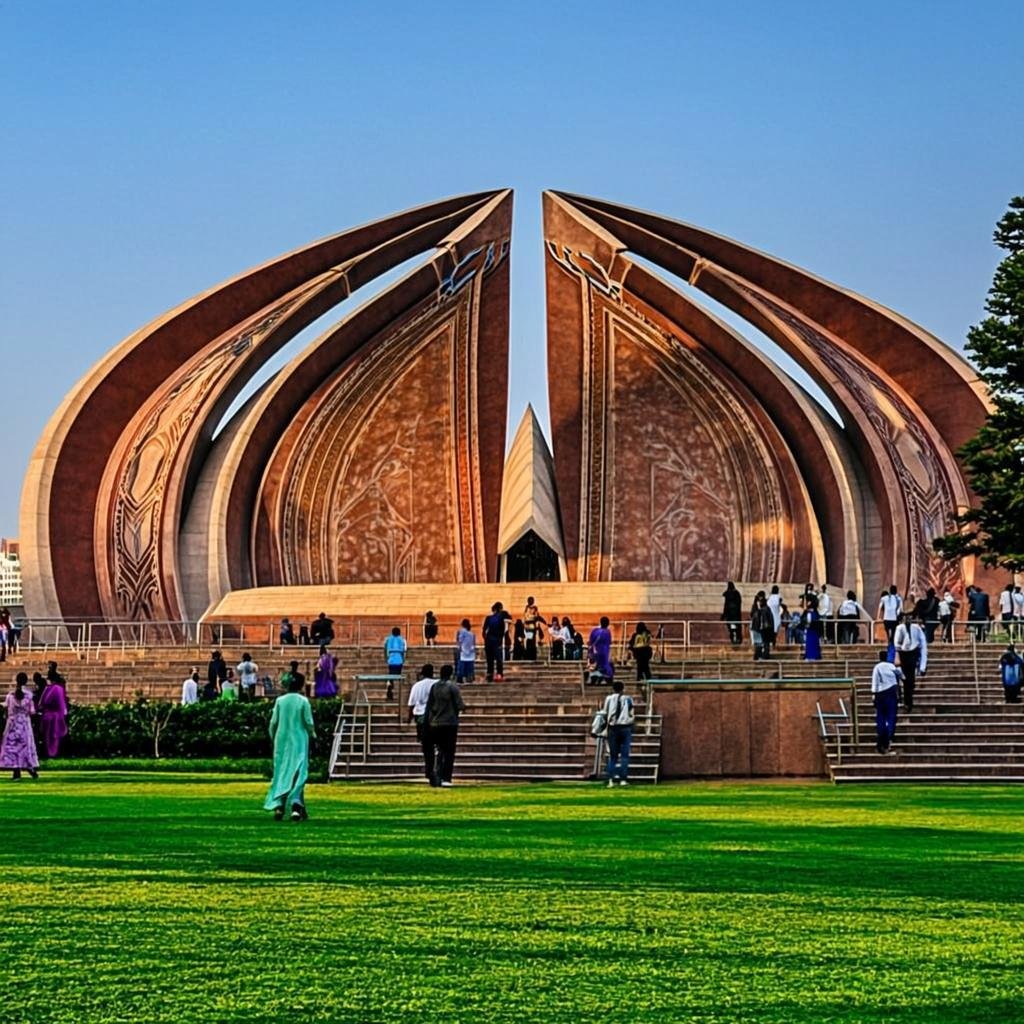
Pakistan Monument: A significant landmark for CSS Pakistan Affairs preparation
Political Development and Constitutional History
Pakistan’s political development and constitutional evolution represent a complex narrative of experimentation, crisis, and adaptation. These topics carry substantial weight in the CSS Pakistan Affairs examination and require careful analysis of the interplay between constitutional provisions, political practice, and power dynamics.
Political Systems and Their Evolution
Pakistan has experimented with various political systems since independence, reflecting the tension between parliamentary and presidential models, Islamic governance, and military authoritarianism. Understanding these systems requires examining both constitutional frameworks and their practical implementation.
The political evolution can be divided into distinct phases:
- Parliamentary System (1947-1958): The initial period featured a Westminster-style parliamentary system, characterized by weak central authority and provincial autonomy.
- Presidential System (1958-1973): Ayub Khan’s regime introduced a presidential system with a strong executive, creating a pattern of centralized authority.
- Parliamentary System (1973-1977): The 1973 Constitution restored parliamentary democracy but was short-lived.
- Military Rule (1977-1988): Zia-ul-Haq’s regime combined presidential authority with Islamization policies.
- Democratic Experiment (1988-1999): A decade of alternating democratic governments marked by instability and corruption.
- Military Rule (1999-2008): Pervez Musharraf’s regime introduced a hybrid system combining presidential authority with selective democratic elements.
- Parliamentary System (2008-Present): A return to parliamentary democracy, though with persistent challenges of governance and instability.
Each phase reflects different approaches to power distribution, center-province relations, and the role of Islam in governance. You should analyze the strengths and weaknesses of each system, paying particular attention to how constitutional provisions have been interpreted, amended, or suspended during periods of political crisis.
Military Interventions and Their Impact
Military interventions have profoundly shaped Pakistan’s political landscape, creating a pattern of alternating civilian and military rule. Understanding these interventions requires examining their causes, justifications, and consequences.
The four major military interventions occurred in:
- 1958: Ayub Khan’s coup, justified by political instability and economic challenges.
- 1977: Zia-ul-Haq’s coup, following allegations of electoral fraud.
- 1999: Pervez Musharraf’s coup, triggered by the Kargil conflict and civilian-military tensions.
Each intervention had distinct characteristics and consequences:
- Constitutional Engineering: Military rulers typically amended or suspended the constitution to consolidate power.
- Centralization of Authority: A consistent pattern of reducing provincial autonomy and concentrating power in the executive.
- Islamization: Particularly under Zia-ul-Haq, military rule was characterized by the implementation of Islamic laws.
- Economic Reforms: Military regimes often implemented structural adjustment programs and economic liberalization.
- Judicial Manipulation: The judiciary’s role was frequently compromised through appointments and constitutional amendments.
The impact of these interventions extends beyond the period of military rule, creating long-term effects on democratic culture, civil-military relations, and constitutional development. You should develop the ability to analyze these interventions within broader theoretical frameworks of civil-military relations and democratic transition.
Democratic Transitions and Challenges
Pakistan’s democratic transitions have been characterized by both progress and persistent challenges. Understanding these transitions requires examining the factors that enabled democratization, the obstacles faced, and the quality of democratic governance.
Key democratic transitions include:
- 1971-1973: The transition following the separation of East Pakistan, leading to the 1973 Constitution.
- 1988: The transition following Zia-ul-Haq’s death, marking the beginning of a decade of democratic rule.
- 2008: The transition following Musharraf’s resignation, resulting in the first peaceful transfer of power between civilian governments.
- 2013: The first completion of a full term by a democratically elected government.
- 2018: The transition following the 2018 general elections.
Despite these transitions, Pakistan’s democracy faces persistent challenges:
- Institutional Weaknesses: Underdeveloped democratic institutions, weak political parties, and an ineffective electoral system.
- Electoral Manipulation: Allegations of electoral fraud and manipulation undermine democratic legitimacy.
- Political Polarization: Growing polarization between political parties and ideological groups.
- Judicial Activism: The judiciary’s expanded role in political matters creates uncertainty.
- External Interference: Foreign influence and pressure undermine democratic sovereignty.
You should develop a nuanced understanding of these challenges, avoiding simplistic narratives of failure or success. Instead, focus on analyzing the complex factors that shape Pakistan’s democratic development and the potential pathways for strengthening democratic governance.
Governance and Administrative Structure
Pakistan’s governance and administrative structure represents a complex interplay of constitutional provisions, institutional practices, and power dynamics. These topics are central to the CSS Pakistan Affairs examination, requiring candidates to understand both the formal structures and their practical implementation.
Federal and Provincial Structures
Pakistan’s federal system has evolved significantly since independence, reflecting the tension between centralization and provincial autonomy. The 1973 Constitution established a federal structure with a parliamentary system, though this has been frequently amended or suspended during periods of political crisis.
The federal structure consists of:
- Federal Government: Led by the Prime Minister and comprising ministries, divisions, and attached departments.
- Provincial Governments: Four provinces (Punjab, Sindh, Khyber Pakhtunkhwa, Balochistan) with elected chief ministers and cabinets.
- Special Regions: Federally Administered Tribal Areas (now part of Khyber Pakhtunkhwa), Azad Jammu and Kashmir, and Gilgit-Baltistan.
Key features of the federal system include:
- Legislative Division: Subjects divided between federal and provincial legislative lists.
- Financial Relations: Revenue sharing mechanisms and fiscal transfers between federal and provincial governments.
- Concurrent Subjects: Areas where both federal and provincial legislatures can make laws.
- Dispute Resolution: mechanisms for resolving intergovernmental conflicts.
The federal structure has been a source of tension, particularly regarding provincial autonomy and resource distribution. You should analyze key constitutional provisions (Articles 1-152 of the 1973 Constitution) and their practical implementation, paying attention to recent developments such as the 18th Amendment (2010), which significantly strengthened provincial autonomy.
Local Government Systems
Local government represents the third tier of governance in Pakistan, though its structure and authority have varied significantly across different regimes and regions. Understanding local government systems requires examining both constitutional provisions and practical implementation.
The evolution of local government includes:
- Basic Democracies (1959-1979): Ayub Khan’s system established a hierarchical structure with limited democratic elements.
- Local Government Ordinances (1979): Zia-ul-Haq’s system emphasized decentralization while maintaining centralized control.
- Devolution Plan (2000): Musharraf’s system created a three-tier structure with elected representatives at district, tehsil, and union council levels.
- Provincial Systems (2010-Present): After the 18th Amendment, provinces developed their own local government systems.
Key features of contemporary local government systems include:
- Elected Representatives: District nazims, councilors, and chairpersons at various levels.
- Administrative Structure: District coordination officers and other administrative officials.
- Service Delivery: Responsibility for local services including education, health, and infrastructure.
- Financial Resources: Own-source revenue and transfers from higher levels.
Local government systems face significant challenges including political interference, capacity constraints, and limited financial resources. You should analyze these challenges within the broader context of decentralization and governance reform, examining both theoretical frameworks and practical implementation in Pakistan.
Civil Bureaucracy and Its Evolution
Pakistan’s civil bureaucracy represents one of the most enduring institutions of the state, playing a crucial role in policy implementation and governance. Understanding its evolution and current structure requires examining both historical development and contemporary challenges.
The evolution of civil bureaucracy includes:
- Colonial Legacy: The Indian Civil Service (ICS) established during British rule, characterized by elitism and administrative centralization.
- Post-Independence Development: Expansion and indigenization of the bureaucracy, maintaining the colonial structure.
- Civil Service Reforms: Various attempts at reform, including the 1973 Civil Service Reforms and subsequent measures.
- Contemporary Challenges: Political interference, capacity issues, and the need for modernization.
Key features of the civil bureaucracy include:
- Structure: Federal, provincial, and district levels with various occupational groups (CSS, PMS, etc.).
- Recruitment and Training: Competitive examination system and training at civil service academies.
- Role in Governance: Policy formulation, implementation, and administrative functions.
- Relationship with Political Leadership: Tension between bureaucratic neutrality and political loyalty.
The civil bureaucracy faces significant challenges including political interference, capacity constraints, and the need for reform to meet contemporary governance needs. You should analyze these challenges within the broader context of governance reform and institutional development, examining both theoretical frameworks and practical implementation in Pakistan.
Foreign Policy and International Relations
Pakistan’s foreign policy has evolved significantly since independence, shaped by historical context, security concerns, and changing international dynamics. These topics carry substantial weight in the CSS Pakistan Affairs examination and require candidates to understand both historical developments and contemporary challenges.
Historical Evolution of Pakistan’s Foreign Policy
Pakistan’s foreign policy has undergone significant evolution since independence, reflecting changing security concerns, international alignments, and regional dynamics. Understanding this evolution requires examining distinct phases and their underlying drivers.
The historical evolution can be divided into several phases:
- Alignment Phase (1947-1965): Characterized by alignment with the Western bloc during the Cold War, primarily through membership in CENTO and SEATO.
- Non-Aligned Phase (1965-1971): A brief period of non-alignment following the 1965 war with India.
- Regional Focus Phase (1971-1990): Following the 1971 war, Pakistan strengthened relations with Muslim countries and China while pursuing a policy of strategic depth in Afghanistan.
- Post-Cold War Phase (1990-2001): Pakistan faced sanctions following nuclear tests in 1998 and sought to balance relations with the US, China, and Muslim countries.
- **Post-9/11 Phase (2001-201

Foreign policy analysis forms a critical component of Pakistan Affairs for CSS exams


Excellent work thans
Thanks Soo much